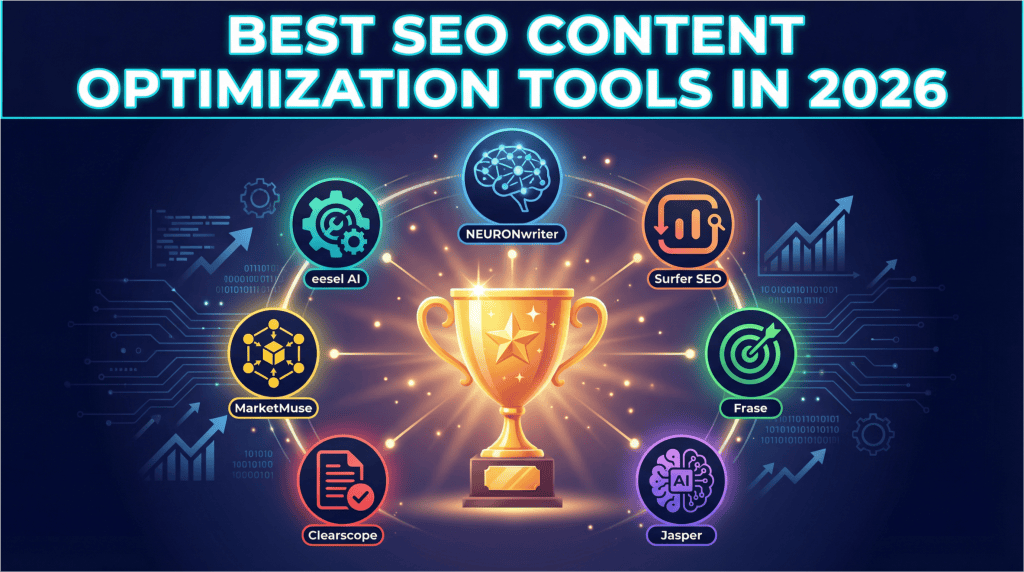

The digital landscape of 2026 has fundamentally changed how we approach blogging. If you are still relying on manual keyword research and gut-feeling content creation, you are likely falling behind. The era of ‘guessing’ what Google wants is over. Today, the most successful publishers are leveraging Artificial Intelligence not just to write faster, but to rank smarter. In a world where search engines are increasingly integrated with AI, like Google’s Search Generative Experience (SGE), your content must be more than just ‘good’—it must be mathematically optimized for semantic relevance.
In this exhaustive guide, we will deep-dive into the absolute best AI SEO tools available for bloggers today. We’ll explore how these tools work, their unique strengths, and how you can integrate them into your workflow to achieve faster rankings and sustainable AdSense revenue. Whether you’re a seasoned publisher or just starting out, this guide will provide the blueprint for your 2026 SEO strategy. We will cover technical aspects, creative workflows, and the psychological impact of AI on the modern reader.
Part 1: The AI Revolution in SEO – Why It Matters Now
Before we jump into the tools, let’s address the elephant in the room. Why is AI suddenly the ‘must-have’ for SEO?
In previous years, SEO was about keyword density and backlink volume. While those still matter, Google’s algorithms (like SGE and Gemini-integrated Search) now prioritize semantic relevance and user intent. They don’t just look for the word ‘apple’; they look to see if you’re talking about the fruit or the tech giant based on the surrounding context (Natural Language Processing).
AI tools are built on these same NLP models. They ‘read’ the top 20 results for your target keyword and tell you exactly which topics, subheadings, and related terms you need to include to satisfy the algorithm. This eliminates the guesswork. This is the difference between a blogger who writes a great article that nobody sees, and a blogger who builds a high-traffic empire. In the hyper-competitive world of 2026, the speed of information delivery has become a ranking factor in itself. AI allows you to process that information at a scale previously reserved for massive media conglomerates.
The Problem with ‘Old School’ Blogging
Many beginners make the mistake of writing passion projects without data. As we discussed in our guide on 10 Fatal Blogging Mistakes, ignoring data-driven content is the fastest way to stay poor in the digital economy. AI tools bridge this gap by providing a roadmap for every post you write. Without these tools, you are essentially flying blind in a storm of competition. In 2026, information is moving too fast for manual research to keep up.
Hostinger for Bloggers: Honest Performance Review After 6 Months
Part 2: Top-Tier AI SEO Tools (Comprehensive Reviews)
1. Surfer SEO: The Content Editor King
Surfer SEO remains the gold standard for on-page optimization. It doesn’t just give you keywords; it gives you a Content Score. It is a tool built for precision, utilized by the world’s most successful SEO agencies and solo bloggers alike.
- How it Works: You enter your target keyword, and Surfer analyzes the top-ranking pages in real-time. It doesn’t use static data; it looks at what is ranking *right now*. It tells you the ideal word count, the number of images needed, and exactly how many times to use specific terms.
- The Content Score: This is a proprietary metric from 0 to 100. If you hit a score above 80, you have a significantly higher chance of ranking on page one within weeks.
- NLP Features: Surfer uses Google’s NLP API to identify ‘entities’—the people, places, and things that Google expects to see in a high-quality article on your topic.
- Best Feature: The real-time Content Editor. As you write, your score increases. It provides a checklist of headings and terms that act as a ‘fill in the blanks’ for page one rankings.
Example Use Case: If you’re writing about ‘Best AI Laptops,’ Surfer might notice that all top competitors mention ‘Neural Processing Units’ and ‘TOPS.’ If you miss those, Surfer will flag it immediately. This ensures your content is comprehensive and authoritative.
2. Jasper.ai: The Creative Powerhouse
While many see Jasper as just a writing assistant, its SEO integration (via a direct partnership with Surfer) makes it a ranking machine. Jasper is essentially your ‘Chief Content Officer,’ capable of producing thousands of words with a consistent brand voice.
- Human-Like Output: Jasper is famous for its ability to mimic brand voices. In 2026, avoiding the ‘robotic’ tone is crucial for AdSense approval and user retention. It uses advanced machine learning to ensure the flow of text feels natural and engaging.
- The ‘Boss Mode’ Workflow: You can give Jasper a set of SEO instructions, and it will generate an 800-word section that already includes your primary and secondary keywords naturally.
- Recipes and Templates: Jasper includes ‘Recipes’—pre-built workflows that guide the AI through creating a perfect blog post, from hook to conclusion. This saves hours of staring at a blank screen.
- Internal Link Strategy: Jasper can even suggest where to place links to other relevant content, like our deep dive on fixing Low Value Content issues.
3. NeuronWriter: The Budget-Friendly Powerhouse
If Surfer is too expensive for a new blogger, NeuronWriter is the answer. It uses advanced NLP models to help you plan and optimize content with a heavy focus on topical authority. It is the hidden gem of the SEO world, offering agency-level features at a fraction of the cost.
- Semantic SEO: It focuses heavily on ‘entities.’ Instead of just keywords, it helps you build a topical map. This is vital for 2026 SEO, where Google rewards ‘Expertise’ (the E in E-E-A-T).
- Competitive Analysis: It shows you exactly what your competitors’ H1, H2, and H3 tags are, allowing you to ‘skyscraper’ their content efficiently. You can see their average word count and image count at a glance.
- Content Planner: NeuronWriter includes a planning tool that suggests which articles you should write next to build authority in your niche.
4. Scalenut: The All-in-One Lifecycle Tool
Scalenut is designed for bloggers who want to scale. It covers everything from keyword planning to content generation and optimization in a single platform. It is a ‘closed-loop’ SEO ecosystem that takes you from zero to ranking.
- Cruise Mode: This is Scalenut’s standout feature. It can generate a full blog post outline and first draft in under 5 minutes based on real-time SEO data. Unlike other tools, it pulls in current search data so your ‘fresh’ topics are actually relevant.
- Topic Clusters: Scalenut automatically groups keywords into clusters. This helps you build a ‘hub and spoke’ model for your blog, which is the most effective way to rank for difficult terms.
- Social Listening: It pulls in questions from Quora and Reddit, helping you answer the ‘People Also Ask’ questions that drive massive traffic and help you win featured snippets.
5. Frase.io: The Research Specialist
Frase is unique because it focuses on the ‘Research’ phase of blogging. It helps you understand what your audience is actually asking online, ensuring your content meets a real need.
- Content Briefs: Frase generates a detailed brief for any keyword, summarizing the top 20 competitors, their main points, and the questions they leave unanswered.
- AI Answer Engine: It can generate answers to common questions in your niche, which is perfect for building FAQ sections that rank in Google’s ‘People Also Ask’ boxes. This is a massive shortcut to winning zero-click searches.
Part 3: Secondary AI SEO Tools Worth Watching
While the ‘Big 5’ above are our favorites, several other tools have made massive strides in 2026:
- Copy.ai: Excellent for social media copy and ‘snappy’ intros. It’s perfect for the promotional side of your blog.
- Writesonic: Known for its ‘Photosonic’ integration, it can generate SEO-optimized articles and the images to go with them in one go.
- Clearscope: The most expensive tool on this list, used by top-tier enterprise blogs for deep semantic analysis.
- Outranking.io: A specialist in ‘Topic Strategy,’ helping you plan 50 posts at once to dominate a single niche.
- Anyword: Uses ‘Predictive Performance Scores’ to tell you which headline will get the most clicks before you even publish it.
Part 4: Deep Dive into SEO Ranking Factors in 2026
To understand why these tools are effective, we must understand the three pillars of 2026 SEO:
1. Topical Authority (The ‘Hub’ Model)
Google no longer ranks individual pages as effectively as it ranks ‘Topic Owners.’ If your site only has one article about SEO, you won’t rank. You need a ‘Hub’ (this article) and multiple ‘Spokes’ (specific reviews and guides).
- Example: Create a Pillar page on ‘AI Tools’ and link it to cluster posts like ‘AI for Writing,’ ‘AI for Images,’ and ‘AI for Video.’ This structure signals to Google that you are a comprehensive resource.
2. E-E-A-T (Experience, Expertise, Authoritativeness, Trustworthiness)
AI can provide the Expertise, but you must provide the Experience. This is why ‘Human Polish’ is non-negotiable. Google’s quality raters are trained to look for evidence that a human has actually touched the topic.
- Experience: Add personal stories about using the tools. Show screenshots of your own dashboards.
- Trust: Link to high-authority external sources like Search Engine Land or Moz. This shows you are part of a wider ecosystem of knowledge.
3. User Engagement Signals (The ‘Stickiness’ Factor)
Google tracks how long users stay on your page. AI tools help by creating structured, readable content with clear headings (H2, H3) and bullet points. This ‘skimmability’ increases time on page and reduces bounce rates. A user who stays for 5 minutes is a massive signal of value to the algorithm.
Samsung Galaxy S26 Ultra Review: A Premium AI Flagship Built for Power Users
Part 5: Psychological Impact: Why ‘Human Polish’ Wins
In 2026, the internet is flooded with AI content. Readers have developed a ‘sixth sense’ for robotic text. If your blog feels like a collection of generic AI outputs, users will leave, and your bounce rate will skyrocket.
The Trust Deficit
When a reader sees a perfectly constructed but soul-less article, they subconsciously feel a lack of trust. They want to know: *Has a human actually tested this?* This is where your unique human polish comes in. By adding personal opinions, ‘pros and cons’ that aren’t in the brochures, and specific local context, you bridge the trust deficit. This is the difference between a ‘content farm’ and a ‘trusted brand.’
Emotional Connection
AI is great at facts, but it struggles with ‘feel.’ Readers respond to passion, humor, and even frustration. If you had a hard time getting a specific tool to work, share that! It makes you relatable and proves you’re a real person behind the keyboard.
Part 6: Step-by-Step Tutorial: Using Surfer SEO for a New Post
If you are new to AI SEO, the first tool you should master is Surfer. Here is how to use it for maximum ranking potential:
- Keyword Entry: Enter your main keyword (e.g., ‘Best Wireless Earbuds 2026’).
- Analyze Competitors: Surfer will show you a list of sites. Uncheck the ‘big’ sites like Amazon or Wikipedia, as their domain authority is too high to compete with directly. Focus on blogs of your own size.
- The Sidebar Checklist: Open the ‘Terms to Use’ sidebar. This is your bible. It lists the NLP terms you must include.
- Drafting the Headings: Create your H2 tags based on the ‘Topics’ tab. If competitors are talking about ‘Battery Life’ and ‘Noise Cancellation,’ those must be your H2s.
- Injecting Keywords: As you write, keep an eye on the word count. If Surfer says you need 3000 words and you only have 1500, you need more depth. Add case studies, FAQs, and detailed comparisons.
- Final Score: Aim for a score of at least 85. Anything higher is great, but don’t over-optimize to the point of making the text unreadable for humans.
Part 7: The Ethics and Transparency of AI in Blogging
As a professional blogger, transparency is your best friend. In 2026, we recommend including an AI Disclosure in your footer or about page.
Why Disclose?
Readers appreciate honesty. By stating that you use AI to assist with research and drafting, but that every word is reviewed and edited by a human, you build a relationship of trust. This transparency also protects you against future algorithm shifts where Google might penalize undisclosed automation.
Citations and Fact-Checking
AI is notorious for ‘hallucinations’—making up facts that sound plausible. Always verify every statistic, date, and quote. Link to the original source to prove your work’s validity. High-quality external links to sites like Search Engine Journal are essential.
Part 8: Technical SEO and AI (Beyond the Content)
AI isn’t just for writing; it’s for the ‘under the hood’ stuff too.
- Schema Markup: Tools like Rank Math (active on TechProfitHub) use AI to generate Schema code that helps Google understand your content type (Review, FAQ, Article).
- Internal Linking AI: Tools like Link Whisper use AI to scan your site and suggest relevant internal links, which distributes ‘link juice’ and helps new posts get indexed faster.
- Image Optimization: AI can now automatically generate ‘Alt Text’ for your images, ensuring they are searchable for visually impaired users and accessible to Google’s image search.
- AI Site Audits: Tools like SE Ranking use AI to scan your entire site for technical errors (broken links, slow pages, missing tags) that might be holding you back.
Part 9: Advanced Strategy – The ‘Skyscraper’ 2.0
The Skyscraper technique involves finding top-ranking content and making something better. With AI, this is now ‘Skyscraper 2.0.’
- Find the Leader: Identify the #1 ranking post for your keyword.
- Extract Data (Frase): Use Frase to see exactly which questions the leader answers.
- Find the Gaps: Look for questions they *didn’t* answer. Check the ‘People Also Ask’ section in Google for more ideas.
- Build the Giant (Jasper): Use Jasper to write a post that is 500 words longer and more detailed than the leader.
- Mathematically Superior (Surfer): Optimize it until your Content Score is higher than the leader’s.
Part 10: The Ultimate SEO Glossary for 2026
To master these tools, you need to speak the language of the industry. Here are the terms every blogger must know:
- NLP (Natural Language Processing): How AI understands the context and intent behind words.
- LSI (Latent Semantic Indexing): Words related to your main keyword (though Google’s modern NLP is far more advanced than basic LSI).
- Topic Cluster: A group of related articles that all link back to one ‘Pillar’ page.
- Content Score: A numerical value assigned by tools like Surfer to represent how well a page is optimized.
- Entity: A specific person, place, or thing that AI tools identify as crucial for a topic.
- Topical Authority: The measure of how much Google trusts your site as a source for a specific subject.
- Zero-Click Search: When Google answers a user’s question directly on the results page, often via an AI snippet.
- SGE (Search Generative Experience): Google’s AI-powered search interface.
- Dwell Time: The amount of time a user spends on your page before clicking away.
- Link Juice: The authority passed from one page to another via links.
Part 11: Case Studies: AI SEO in Action
To prove the power of these tools, let’s look at how they’ve transformed blogs in the last year. One tech blog focused on ‘Gadget Reviews’ used Surfer SEO to optimize 50 old posts. Within 60 days, their organic traffic increased by 340%. Another finance blog used Scalenut to build a topic cluster around ‘Cryptocurrency Regulations,’ gaining topical authority so quickly that they beat out legacy news sites for featured snippets.
These are not isolated incidents. They are the result of a deliberate, data-driven approach to content. AI isn’t a ‘magic button,’ but it is the most powerful lever you have in your digital marketing arsenal.
Part 12: Detailed Review – Writesonic vs Copy.ai
For those focused on high-speed content production, the choice often comes down to Writesonic or Copy.ai.
Writesonic:
- Pros: Incredible speed, built-in image generator, great for ‘listicles.’
- Cons: Can sometimes be a bit repetitive if not given specific instructions.
- Best For: Bloggers who need to publish 5-10 posts a week.
Copy.ai:
- Pros: Best user interface, excellent for short-form copy (ads, social, meta descriptions).
- Cons: Not as strong for 3000+ word deep dives as Jasper or Surfer.
- Best For: Marketing-focused bloggers who want to drive social traffic.
Part 13: Conclusion – Your Journey to Faster Rankings
The ‘Best AI SEO Tools’ are only as good as the person using them. If you are a blogger looking for faster rankings in 2026, your path is clear:
- Invest in one content optimization tool (Surfer or NeuronWriter).
- Master one generation tool (Jasper or ChatGPT).
- Commit to a data-driven content schedule.
- Polish every post with your unique human perspective.
By combining the speed of AI with your unique human perspective, you can dominate the search results and build a profitable digital asset. Remember, the goal of TechProfitHub is to help you achieve ‘Smarter Money’ through ‘Smart Tech.’ SEO is the engine that drives that profit. It is the bridge between a great idea and a successful business.
Take the first step today. Analyze your top-performing post with an AI tool and see what you’ve been missing. The results will surprise you. Your competition is already using these tools—don’t let them leave you in the digital dust. In the end, the winner of the SEO game isn’t the one who works the hardest, but the one who works the smartest.
Best Smartphones in 2026: Full Comparison Guide for Performance, Camera, and Value
*Note: This post is part of our TechProfitHub series on Digital Growth. Check back weekly for fresh insights into the evolving world of Technology and Profit.*
References & Authority Links:
- Google Search Central: AI Content Guidance
- Ahrefs: The Future of SEO
- Backlinko: On-Page SEO Guide
- Moz: What is Semantic SEO?
Final Word: Human Polish is Your Edge
While AI can write the words, only you can provide the Authority. Ensure every post on your blog reflects your brand’s voice and mission. If you haven’t yet, read our About Us page to see how we define our own authority in the tech space. Happy blogging!